AAC BLOCK WALL JOINT CRACKING: AN IN-DEPTH TECHNICAL ANALYSIS OF ROOT CAUSES AND CONTROL SOLUTIONS
In today’s trend of green and sustainable construction, Autoclaved Aerated Concrete (AAC) blocks are increasingly utilized in industrial factories, Ready-Built Factories (RBF), and high-rise buildings. This popularity is driven by their outstanding advantages, including lightweight properties, thermal insulation, acoustic insulation, and fire resistance.
However, one of the most common technical challenges encountered after the project handover stage is the appearance of vertical cracks along the mortar joints or hairline cracks on the plastered surface. This issue not only impairs aesthetics and leads to wall membrane water leakage but also compromises the technical reputation of the contractor.
Many visual assessments at jobsites mistakenly attribute this to structural displacement or the quality of the masonry blocks themselves. However, from a materials science perspective, the root cause largely stems from the imbalance of capillary suction pressure between the AAC blocks and the auxiliary masonry mortar.
1. Cracking Mechanism: The Effect of Reverse Capillary Suction (Dehydration)
AAC blocks are manufactured using gas-forming technology, resulting in a porous structure with millions of independent micro-air bubbles. While this specific structure provides excellent thermal insulation, it simultaneously generates an extremely strong capillary suction force against water.
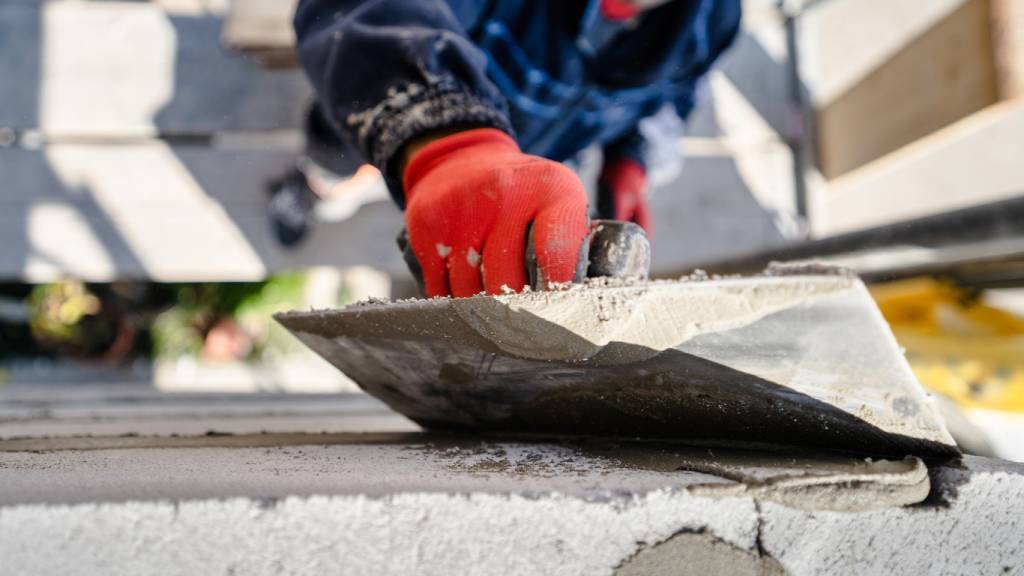
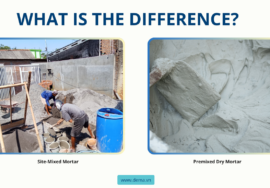
When contractors use traditional mortar (conventional site-mixed sand-cement) or pre-mixed mortars that do not meet specialized grade requirements:
- Sudden Water Loss: The moment the mortar comes into contact with the block surface, the capillary force of the AAC block reverses and sucks the entire free water content out of the mortar into the block body.
- Hydration Consequence: This rapid water loss leaves insufficient moisture for the cement in the mortar to undergo complete hydration. The mortar layer becomes “dry-killed,” losing its designed bond strength.
- Volumetric Drying Shrinkage: Mortar subjected to forced drying will experience sudden volumetric shrinkage. Since traditional mortar joints are typically thick (ranging from 10mm to 15mm), the large volume of shrinkage generates tensile stress that exceeds the load-bearing capacity of the mortar. This inevitably leads to membrane tearing and vertical cracks along the joint system.
2. Control Solutions through Aggregates Engineering and Specialized Additives
To completely resolve the cracking puzzle of lightweight blocks, the technical solution does not lie in saturating the blocks with water prior to masonry work (which inadvertently increases the internal moisture of the wall, leading to risks of dampness and paint peeling later on). The core solution must lie in the internal water retention capacity of the auxiliary mortar system.
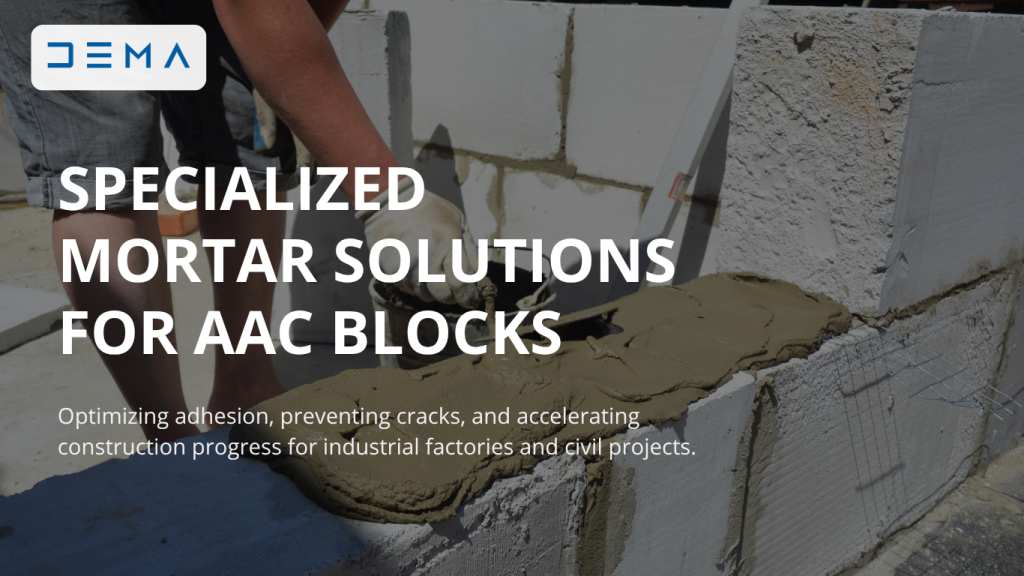
Specialized mortar for AAC blocks must strictly comply with two technical criteria:
Selected Fine Aggregates
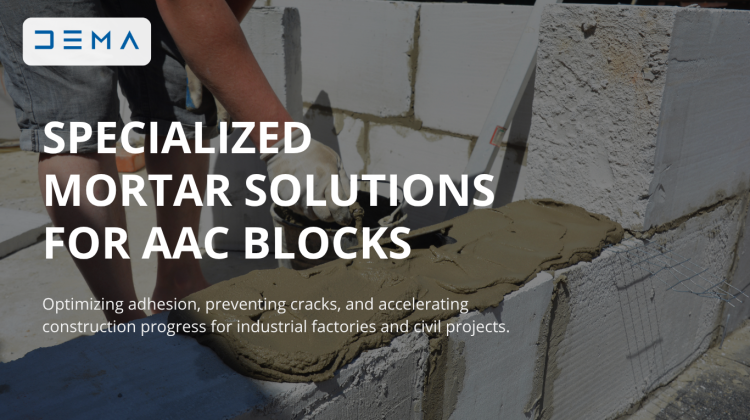
Unlike natural masonry sand, which has an uneven fineness modulus, the aggregates in specialized mortar must be dried, separated, and screened to achieve an ultra-small fineness modulus. This allows installers to apply an ultra-thin joint system (only 2mm to 3mm) while still ensuring compactness without aggregate voids. The material rule is clear: The thinner the mortar joint, the lower the volumetric shrinkage, the smaller the tensile stress generated, and the closer the risk of joint cracking approaches zero.
Advanced Water Retention Agents
This is the technical “soul” of lightweight mortar systems. Water-retaining polymers (such as high-quality Cellulose derivatives) are integrated into the mix design to tightly bind water molecules within the mortar matrix, resisting the capillary suction from AAC blocks. Consequently, the mortar maintains its necessary workability and open time, allowing the cement to hydrate gradually, achieve its designed strength class, and form a robust chemical bond onto the block surface.
3. The Critical Role of Substrate Preparation Prior to Skimcoat Application
An AAC block wall constructed with standard thin-joint mortar that is flat, smooth, and structurally stable serves as the ideal substrate for subsequent finishing stages.
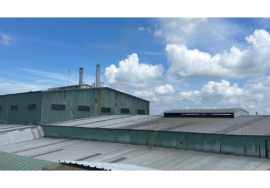
If the initial mortar joint system is substandard (either uneven or already plagued by hidden micro-cracks due to shrinkage), the subsequent thin rendering layer (skimcoat) will inevitably experience reflective cracking after a short period of operation. This skin-tearing phenomenon occurs particularly rapidly under the influence of thermal expansion and contraction cycles imposed on the wall membrane—especially in industrial factory structures with corrugated metal roofs, which experience massive diurnal temperature fluctuations between day and night.
Conclusion from DEMA Experts
Optimizing finishing materials goes beyond merely selecting a good bag of mortar; it requires a deep understanding of the physical interactions between the constituent material layers of the wall system.
At DEMA, we approach construction challenges from the perspective of solution engineers. In addition to researching and supplying auxiliary materials with consistent technical quality, DEMA’s expert team is always ready to collaborate with Project Management (PM) units, Construction Supervisors, and Contractors. We assist in calculating material consumption, conducting jobsite surveys, and delivering the most optimized mix design solutions for each specific structural project.
If your project engineers or partners are facing technical difficulties related to AAC block masonry installation, industrial flooring, or building envelope systems, please contact DEMA’s technical department for specialized support.
Contact Information for Solution Consultation:
- Email: Executive@dema.vn
- Office: 25 Le Trung Nghia, Bay Hien Ward, Ho Chi Minh City.