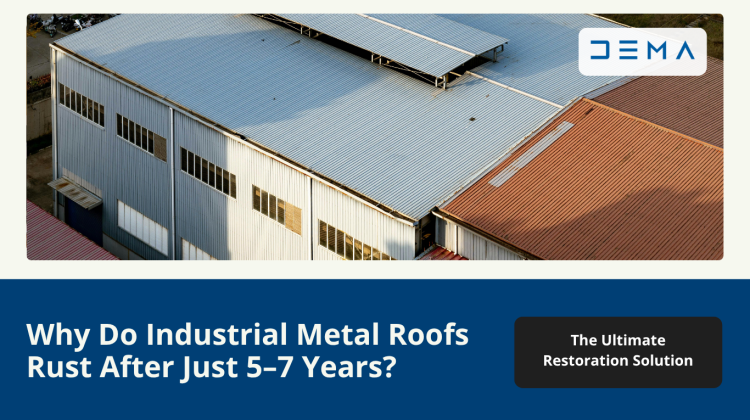
Why Do Industrial Metal Roofs Rust After Just 5–7 Years? The Ultimate Restoration Solution
Core Summary:
Industrial factory metal roofs typically have a design lifespan of 10–20 years, but in reality, they often begin to rust and leak after only 5–7 years of operation. This deterioration is primarily caused by 5 key agents: UV radiation destroying polymer coatings, acid rain erosion, chemical fumes/salt spray accelerating oxidation, localized water ponding, and lack of routine maintenance. Instead of replacing the entire roof—which is costly and causes production downtime—the current industry trend is roof restoration using Alumanation® 301 (Tremco – USA), a heat-reflective, anti-corrosion coating distributed by DEMA, helping optimize lifecycle costs and protect factory assets for the long term.
Many businesses and project management units assume industrial metal roofs have a service life of 10–20 years and require no attention during the initial operating phase. However, the reality across key industrial zones such as VSIP, Amata, Song Than, Long Hau, etc., tells a different story. Just 5–7 years into operation, many metal roofs already show severe signs of degradation.
This decay process occurs silently. By the time companies discover leaks, the protective substrate is often fully compromised, driving up roof repair, waterproofing, and restoration costs exponentially.
5 Primary Causes of Metal Roof Rusting After 5–7 Years
1. High UV Radiation and Thermal Shock Accelerate Coating Degradation
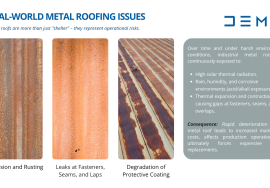
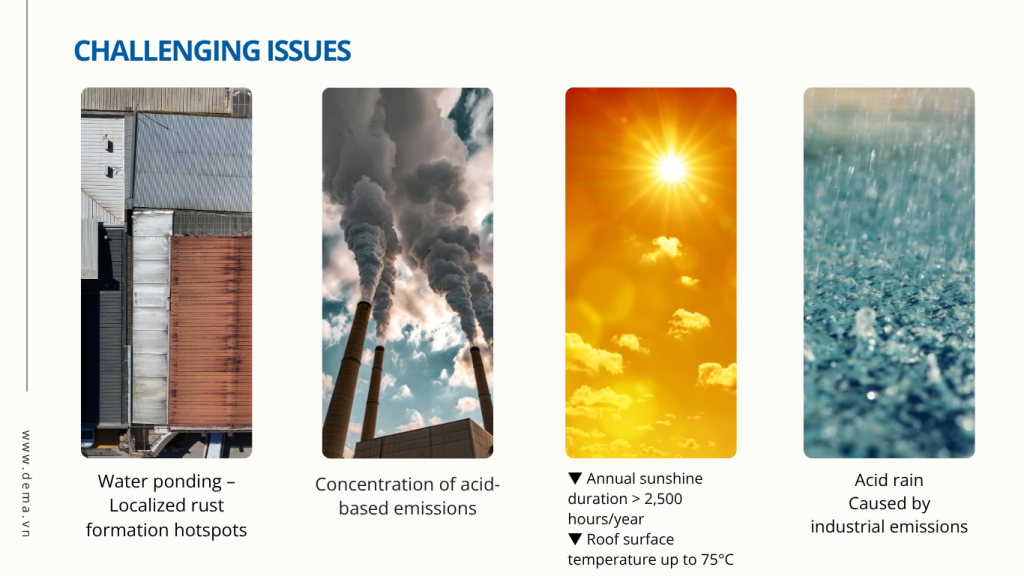
Industrial roofs absorb massive amounts of solar radiation daily. During the dry season in Southern Vietnam, roof surface temperatures can exceed 60–70°C. Constant thermal expansion/contraction combined with intense UV radiation embrittles, cracks, and degrades the protective polymer coatings. Once this protective layer fails, the metal substrate is exposed directly to ambient conditions, maximizing oxidation risks.
2. Persistent Acid Rain Erodes Galvanized Coatings in Industrial Zones
In key manufacturing hubs like Song Than IZ (Binh Duong), Amata IZ (Dong Nai), Long Hau IZ (Long An), or VSIP, airborne industrial emissions mix with rainwater, forming diluted acid rain. This precipitation continuously eats away at the zinc or galvalume protective layer. It is one of the most common reasons roof degradation outpaces initial investor expectations.
3. Industrial Chemical Fumes and Salt Spray Accelerate Oxidation
For specialized facilities such as textile dyeing, chemical processing, electroplating, electronics, food processing, or coastal factories, roofs face dual environmental pressure:
- Corrosive chemical fumes rising from internal manufacturing processes.
- High humidity and airborne salt spray from external environments.
These factors act as potent catalysts, accelerating metal oxidation and causing rust spots to spread aggressively.
4. Water Ponding – The Breeding Ground for Localized Corrosion
Inadequate roof slopes, clogged gutters, or poor drainage lead to standing water on the roof deck. Prolonged moisture exposure, combined with atmospheric oxygen and airborne pollutants, triggers accelerated electrochemical corrosion. What starts as tiny pinhole rust spots will quickly breach the roof sheets if left unaddressed.
5. Installation Defects and Lack of Preventive Maintenance
This is a widespread issue that is often overlooked in practice:
- Foot traffic or dragging metal sheets during construction scratches the protective coating.
- Swarf (metal filings from cutting sheets) left uncleaned rusts quickly and contaminates the roof surface.
- Failure to perform annual roof cleaning and gutter clearing.
Should You Completely Replace a Rusted Metal Roof?
When a metal roof degrades, many facility managers immediately consider full roof replacement. However, complete roof replacement introduces critical operational hurdles:
- Exorbitant Capital Expenditure (CapEx): The cost of tear-off, disposal, purchasing new materials, and re-installation is extremely high.
- Severe Production Downtime: Roof replacement requires extensive safety measures and temporary shutdowns of active production lines underneath, leading to massive financial losses.
- Weather Exposure Risks: Sudden heavy rainfall during roof removal can directly damage expensive machinery, raw materials, and finished goods below.
Expert Insight from DEMA: Corrosion is a chain reaction. Instead of waiting for severe leaks to force a full replacement, smart factory operators choose to restore and protect existing roof systems early. For roofs that remain structurally sound, choosing metal roof restoration services isolates existing corrosion, stops leaks, and saves 30% to 60% in costs compared to full roof replacement.
Alumanation® 301 (Tremco – USA) – The Ultimate Anti-Corrosion Solution
To eliminate corrosion and heat absorption at the root, DEMA Joint Stock Company provides Alumanation® 301—a premium heavy-duty metal roof coating manufactured by Tremco (USA).
[Corroded Old Metal Roof]
│
▼ (Surface Preparation & Rust Treatment)
[Direct Application of Alumanation® 301] -> NO PRIMER REQUIRED
│
▼
[Corrosion Isolated – UV Resistant – Comprehensive Heat Reduction]
Key Advantages of Alumanation® 301:
- Corrosion Control & Rust Encapsulation: Engineered with advanced anti-corrosion technology, the coating cuts off oxygen and moisture from reaching the metal substrate, stopping rust progression completely.
- Exceptional Heat Reflectance: High concentration of premium aluminum pigments reflects solar radiation, significantly reducing roof surface temperatures and cooling internal factory spaces.
- Optimized Application: Can be applied directly in a single coat without requiring a primer on suitable substrates, cutting field application time by up to 50%.
- Zero Production Interruption: The application process is executed entirely on top of the roof using a phased zone-by-zone method, ensuring 100% uninterrupted manufacturing operations underneath.
Don’t Wait for Leaks to Start Roof Maintenance
The metal roof is the most critical protective barrier for all equipment, assets, and personnel inside your facility. Timely maintenance—especially starting from year 5 onward—is the key to optimizing total lifecycle costs and avoiding unexpected operational downtime.
If your factory roof in industrial parks shows signs of yellowing, localized rust, or excessive heat buildup, let DEMA assist you. We provide on-site inspections and tailored protection strategies for every facility type.
👉 REGISTER FOR AN ON-SITE SURVEY & RECEIVE FREE SAMPLES & QUOTATIONS HERE
Frequently Asked Questions (FAQ) About Metal Roof Restoration & Waterproofing
Q1: Is roof restoration using Alumanation® 301 expensive?
Compared to complete roof replacement, restoration using Alumanation® 301 saves 30% to 60% of total investment costs. This turnkey price covers surface preparation, materials, and labor while eliminating the risk of weather damage to interior assets.
Q2: Will the restoration process disrupt our production lines?
Not at all. DEMA’s application process takes place entirely on the roof exterior using a phased section-by-section approach. All manufacturing equipment, assembly lines, and plant personnel can operate at 100% capacity throughout the project.
Q3: What factors determine the quotation for industrial metal roof waterproofing and thermal insulation?
Project pricing depends on:
- Total roof area (m²).
- Existing roof condition (extent of corrosion, failed fasteners, structural punctures).
- Geographic location (facility site within industrial parks like VSIP, Song Than, Amata, Long Hau, etc.).DEMA conducts free on-site technical surveys before providing tailored solutions and optimized quotations.
Q4: How durable is Alumanation® 301 and what is the warranty period?
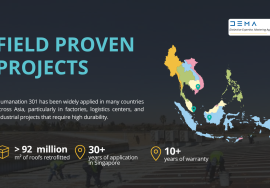
Alumanation® 301 is a premium grade coating by Tremco (USA), designed with high resistance to UV aging and industrial chemicals. It extends metal roof service life by an additional 10–15 years. DEMA backs every project with long-term warranties and periodic maintenance inspections.