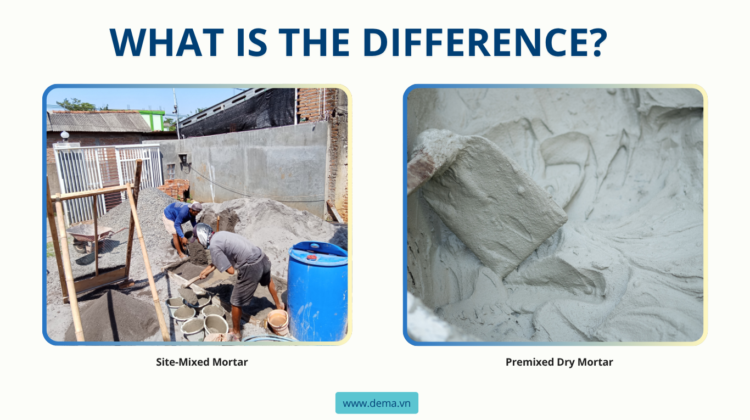
PREMIXED DRY MORTAR VS. SITE-MIXED MORTAR: WHAT IS THE DIFFERENCE?
In modern construction projects, material quality control and installation consistency directly affect overall project performance and durability.
For masonry and plastering works, the two most common options are site-mixed mortar and premixed dry mortar.
So, how does premixed dry mortar differ from traditional site-mixed mortar? Which option is better suited for industrial factories, high-rise buildings, and projects with strict quality control requirements?
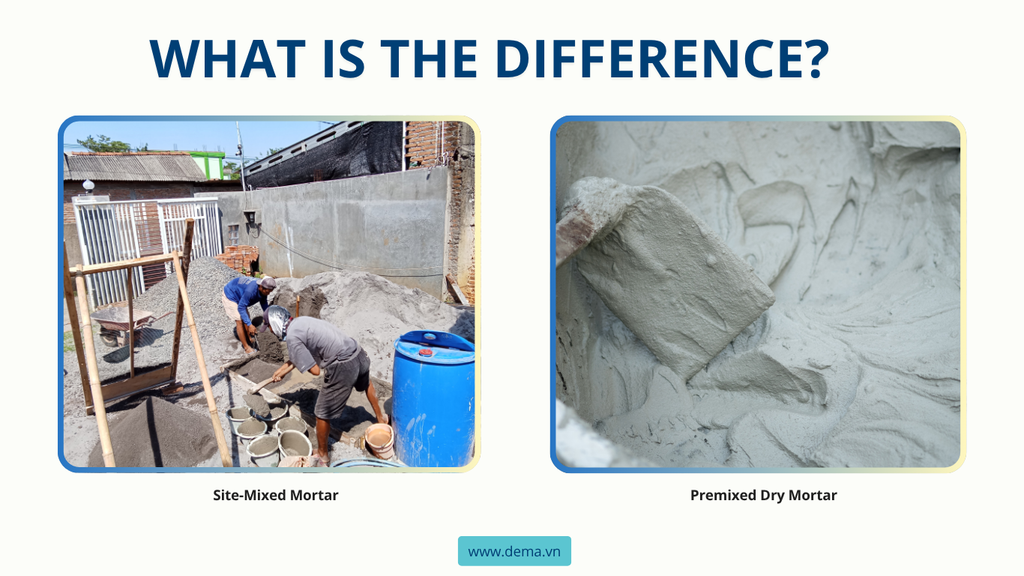
1. What is Site-Mixed Mortar?
Site-mixed mortar is typically prepared on-site by batching and mixing individual ingredients such as cement, sand, and water. Specific admixtures may also be added depending on the job requirements.
While this method offers flexibility in raw material sourcing and preparation, the consistency and overall quality of the mortar depend heavily on:
- Batching accuracy (cement, sand, and water ratios)
- Quality, grading, and moisture content of the sand
- Mixing methods and mixing time
- Workmanship and experience of the site crew
- On-site material storage and handling conditions
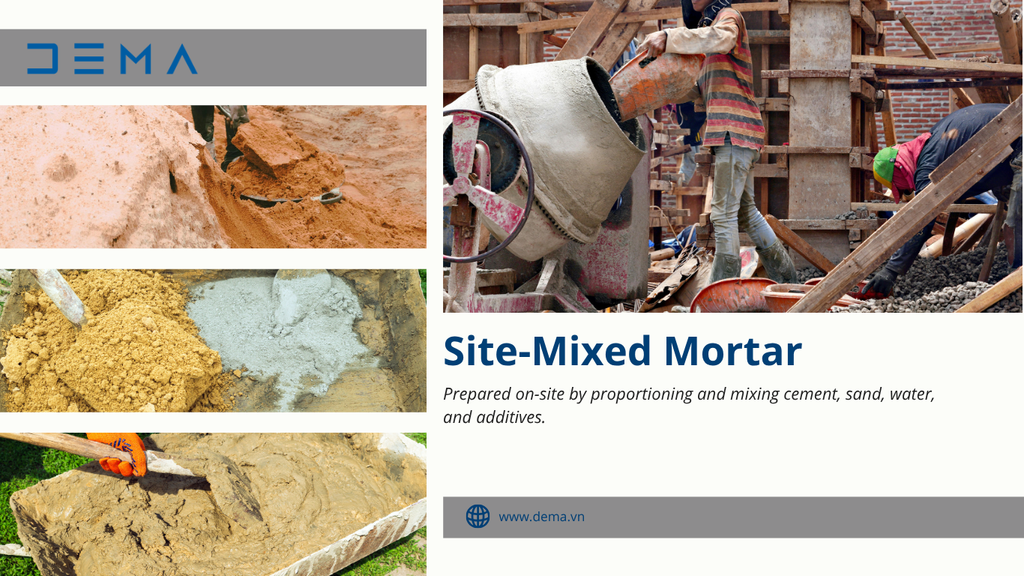
If these variables are not strictly controlled, performance and quality can vary significantly between batches.
2. What is Premixed Dry Mortar?
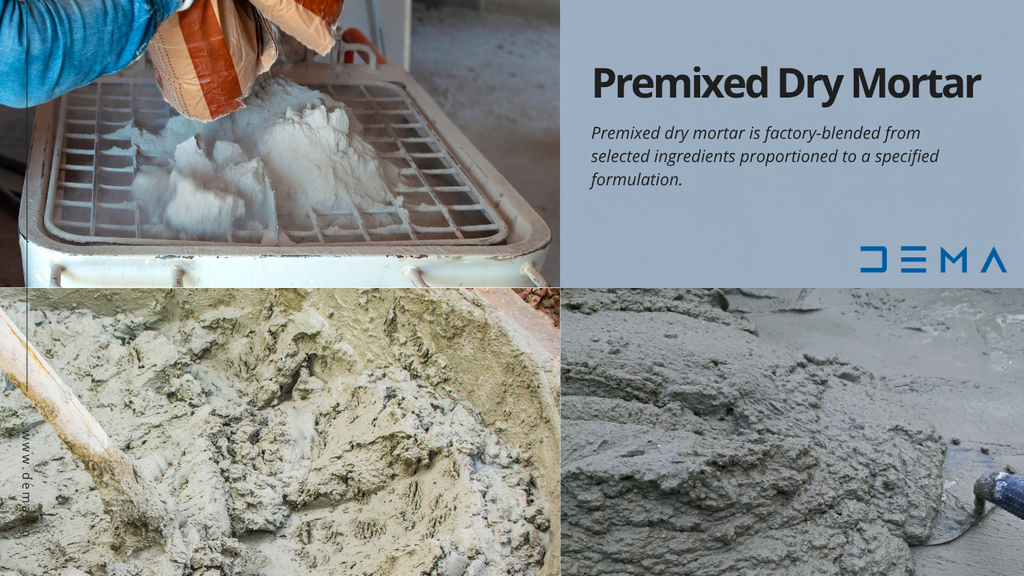
Premixed dry mortar is manufactured in a factory environment, where selected raw materials are precisely proportioned according to a specific product formulation.
Depending on the intended application, the formulation may include cement, fine aggregates, mineral additives, and functional chemical admixtures.
On-site, workers simply add the specified amount of clean water according to the manufacturer’s instructions, then mix and apply following the required technical procedure.
Common product categories include:
- Clay brick masonry mortar
- Autoclaved Aerated Concrete (AAC) block mortar
- Wall plastering and rendering mortar
- Repair mortars and specialized structural formulas
3. Key Comparisons: Premixed Dry Mortar vs. Site-Mixed Mortar
Batch-to-Batch Consistency
- Premixed Dry Mortar: Factory-batched and blended under controlled manufacturing processes, ensuring precise material ratios before delivery to the jobsite.
- Site-Mixed Mortar: Consistency depends entirely on site-level batching procedures, raw material variance, and worker execution.
Quality Control (QC)
- Premixed Dry Mortar: Managed against standardized product formulations, technical data sheets (TDS), and strict quality compliance guidelines.
- Site-Mixed Mortar: Quality control must be continuously monitored across all raw material inputs, mixing ratios, and application stages on site.
Site Logistics and Operations
- Site-Mixed Mortar: Requires dedicated site space for raw aggregate stockpiles (sand), bagged cement, water supplies, and mechanical mixing equipment.
- Premixed Dry Mortar: Reduces the number of individual raw materials to manage on site. However, it still requires a proper logistics plan, dry storage facilities, and systematic supply scheduling to match construction progress.
Material Waste Management
- Premixed Dry Mortar: Simplifies inventory and raw material tracking. However, actual waste reduction still depends on proper consumption calculations, site handling, and storage protection.
4. Is Premixed Dry Mortar Suitable for Every Project?
There is no single mortar type that fits all application requirements.
When specifying mortar, project engineers and contractors should evaluate:
- Substrate type (clay bricks, concrete blocks, AAC blocks, etc.)
- Application purpose (masonry, plastering, or specialized finishing)
- Mortar layer thickness and application methods
- Environmental and exposure conditions
- Project technical specifications and design requirements
- Manufacturer technical data sheets (TDS) and application guidelines
Note: AAC blockwork requires specifically formulated thin-bed mortars designed for AAC absorption and bond characteristics. Standard traditional masonry mortar should not be assumed as a direct substitute.
5. Which Option Should You Choose?
- Site-Mixed Mortar can still meet engineering requirements if raw materials, batching, and application procedures are rigorously controlled on site.
- Premixed Dry Mortar is the preferred choice for projects requiring consistent quality, streamlined site logistics, simplified material management, and product-specific performance guarantees.
The goal is not simply to follow market trends, but to specify the right mortar class for the right application while maintaining strict quality control throughout the installation process.
6. Masonry & Plastering Mortar Solutions from DEMA
DEMA supplies specialized premixed dry mortar systems for construction and finishing works, including masonry mortar, wall plaster, dedicated AAC block mortar, and related technical material solutions.
Product selection should be based on substrate conditions, engineering specifications, and site operational requirements.
👉 Contact DEMA to download our Technical Guide: Secrets to Specifying the Right Mortar for Every Project Phase to Optimize Cost and Execution Quality.