Deteriorating Factory Metal Roofs: A “Ticking Time Bomb” and the Cost Equations Businesses Must Know
Metal roofs are often overlooked in facility management because they remain out of the regular line of sight. However, when signs of deterioration appear, it is not merely an aesthetic issue but the beginning of a chain of severe consequences that directly impact a business’s profitability and operational safety.
1. Three “Red Flag” Signs That Cannot Be Ignored:
In the humid tropical climate and chemical-exposed environments of Vietnam’s industrial parks, metal roofs commonly face the following issues:
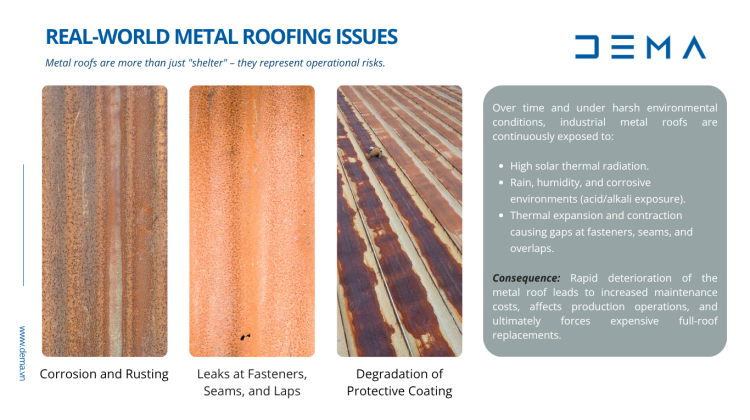
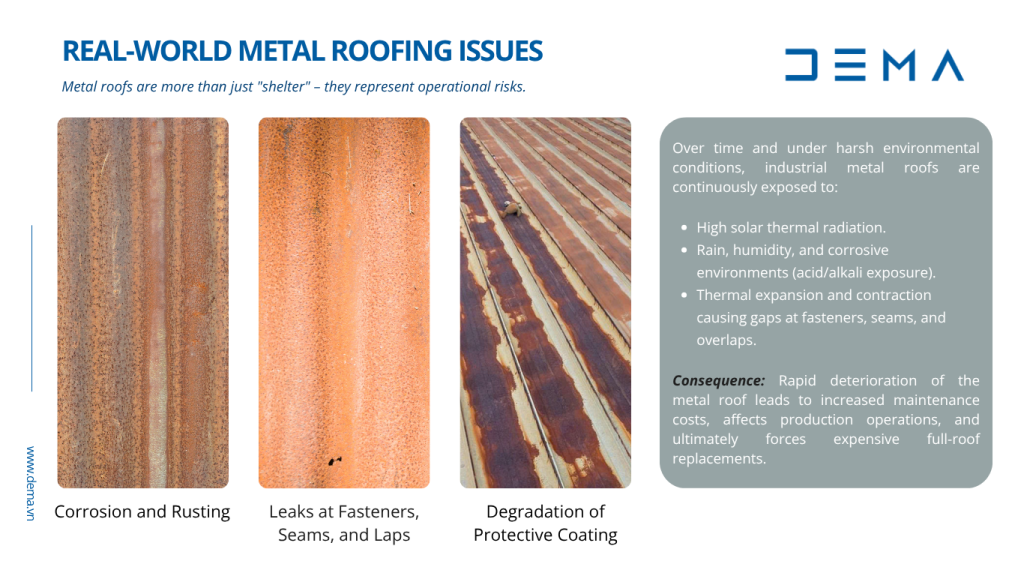
- Corrosion: Originating from roof edges and screw locations, it spreads due to oxidation and electrochemical corrosion. Corrosion not only thins the material but also creates perforations, leading to water ingress.
- Chalking: The protective coating is destroyed by UV rays over time, forming a white powdery layer on the surface. This phenomenon eliminates the roof’s heat reflectivity, causing a sudden spike in heat absorption.
- Open Laps and Loose Fasteners: Due to continuous thermal expansion and contraction, lap joints and connection points become loose, creating gaps for rainwater to penetrate the interior.
2. The Domino Effect:
A leaking roof is more than just a minor nuisance; it triggers a chain of serious risks:
- Damage to Goods and Precision Equipment: For industries like electronics, pharmaceuticals, and food, a single drop of water falling onto a production line or finished goods warehouse can result in billions of VND in losses. High humidity also reduces the lifespan of precision mechanical machinery.
- Occupational Safety and Fire Hazards: Water leakage is a leading cause of electrical short circuits in overhead systems, posing a significant fire risk. Furthermore, wet factory floors cause slips and falls, threatening the safety of personnel and vehicles.
- “Burning Cash” on Energy Bills: When a roof deteriorates and loses its reflective layer, the surface temperature can soar to 70°C. Cooling systems are forced to operate at 30-50% overcapacity to maintain stable temperatures, significantly increasing monthly OPEX.
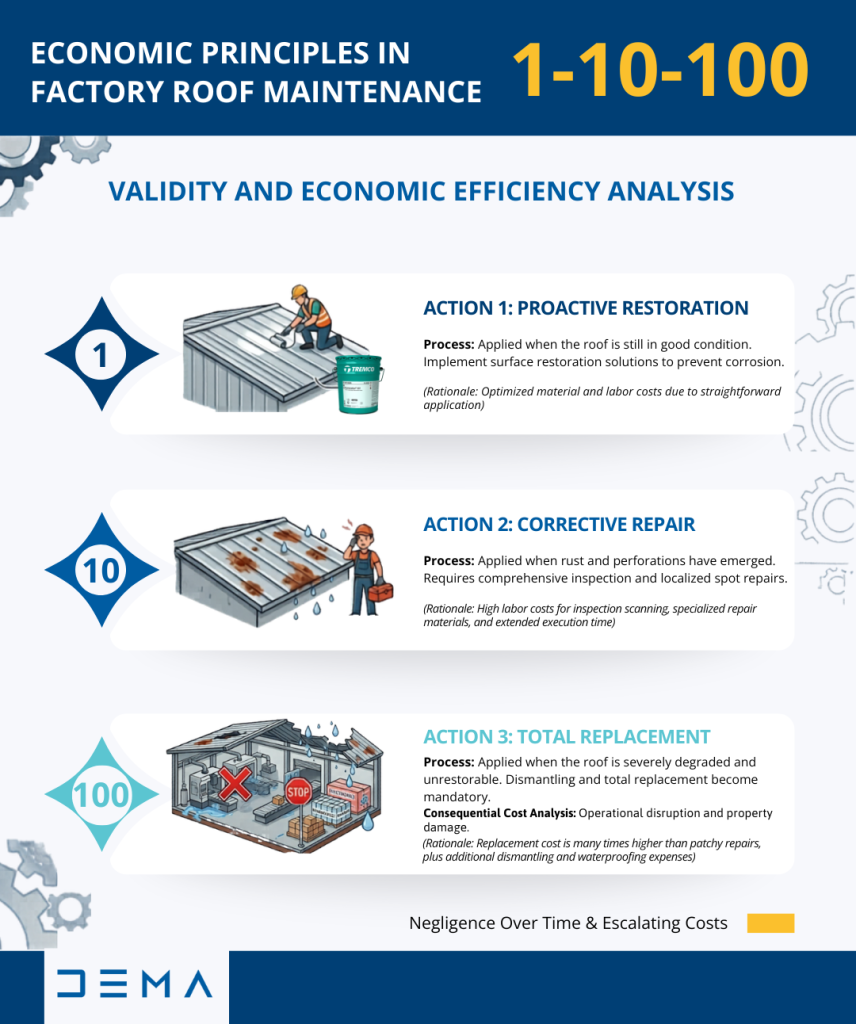
3. Economic Analysis: The 1-10-100 Rule in Roof Maintenance:
The industrial construction industry applies a notable cost rule:
| Cost | Action | Timing |
| 1 unit | Preventive Maintenance | When the roof is still in good condition (restorative coating) |
| 10 units | Corrective Repair | When leaks and localized corrosion have occurred |
| 100 units | Total Replacement | When the roof has completely failed + costs of production downtime |
A Practical Business Case:
Replacing 10,000 m² of metal roofing involves more than just material and labor costs. The biggest bottleneck is that the business must halt production for 15-30 days. The lost revenue during this period is often many times higher than the repair cost, not to mention the impact on reputation with partners.
4. The Optimal Solution: Alumanation 301 – Restore Instead of Replace:
Current trends among leading enterprises favor “Restore” over “Replace” using the Alumanation 301 system:
- Extend lifespan by 12–15 years – with specialized coatings from Tremco.
- No production downtime – all activities below continue as normal during the application.
- Self-funding through energy savings – Superior heat reflectivity immediately lowers roof surface temperatures, reducing cooling costs.
Conclusion
Do not let your metal roof become the reason your financial plans are disrupted. Inspecting and performing restorative maintenance at the right time is a smart investment decision, transforming risk costs into a long-term competitive advantage.
DEMA JSC is proud to be a professional provider of metal roof restoration solutions featuring world-class products from Tremco. Contact us today for a survey and consultation on the optimal solution for your facility.